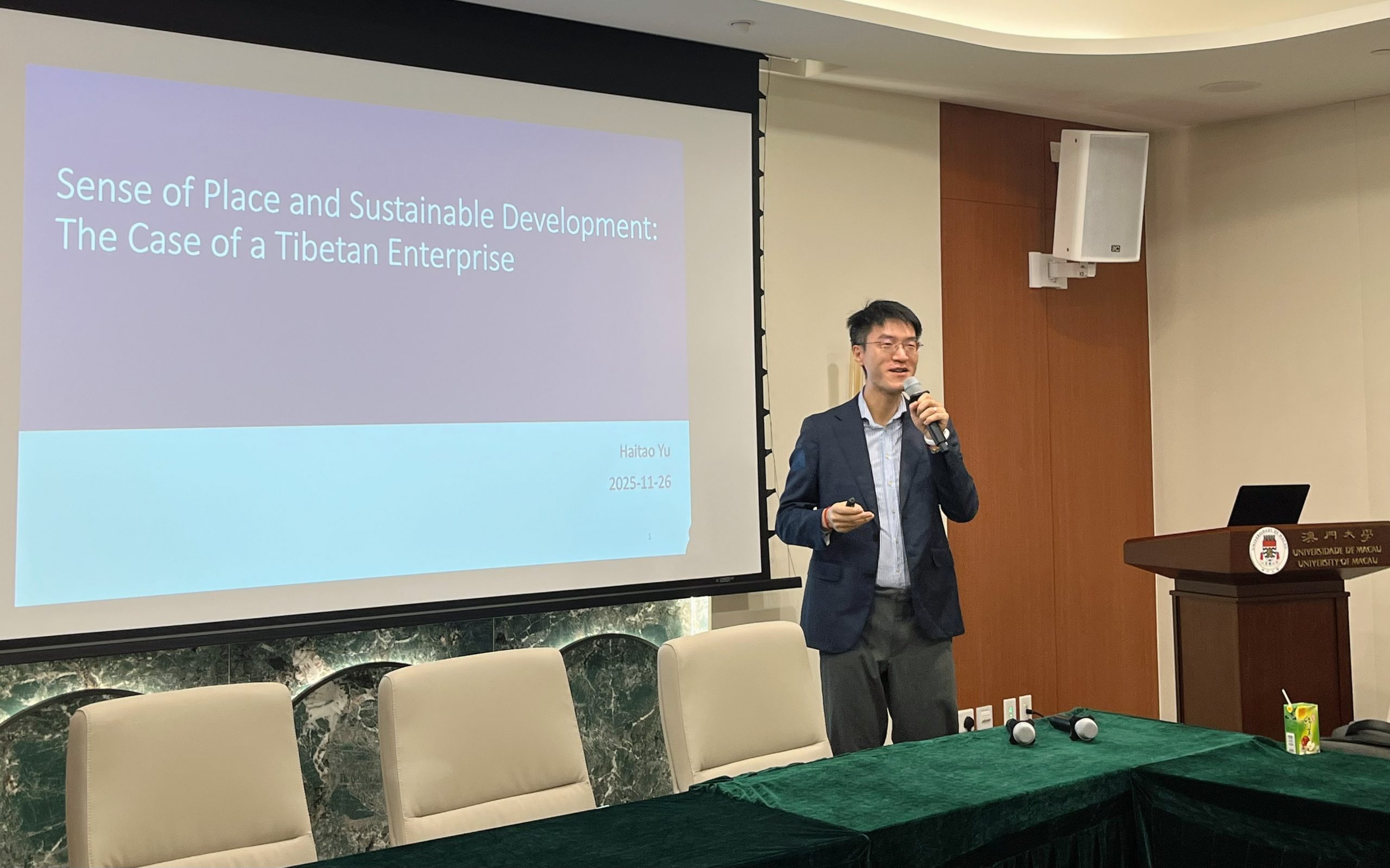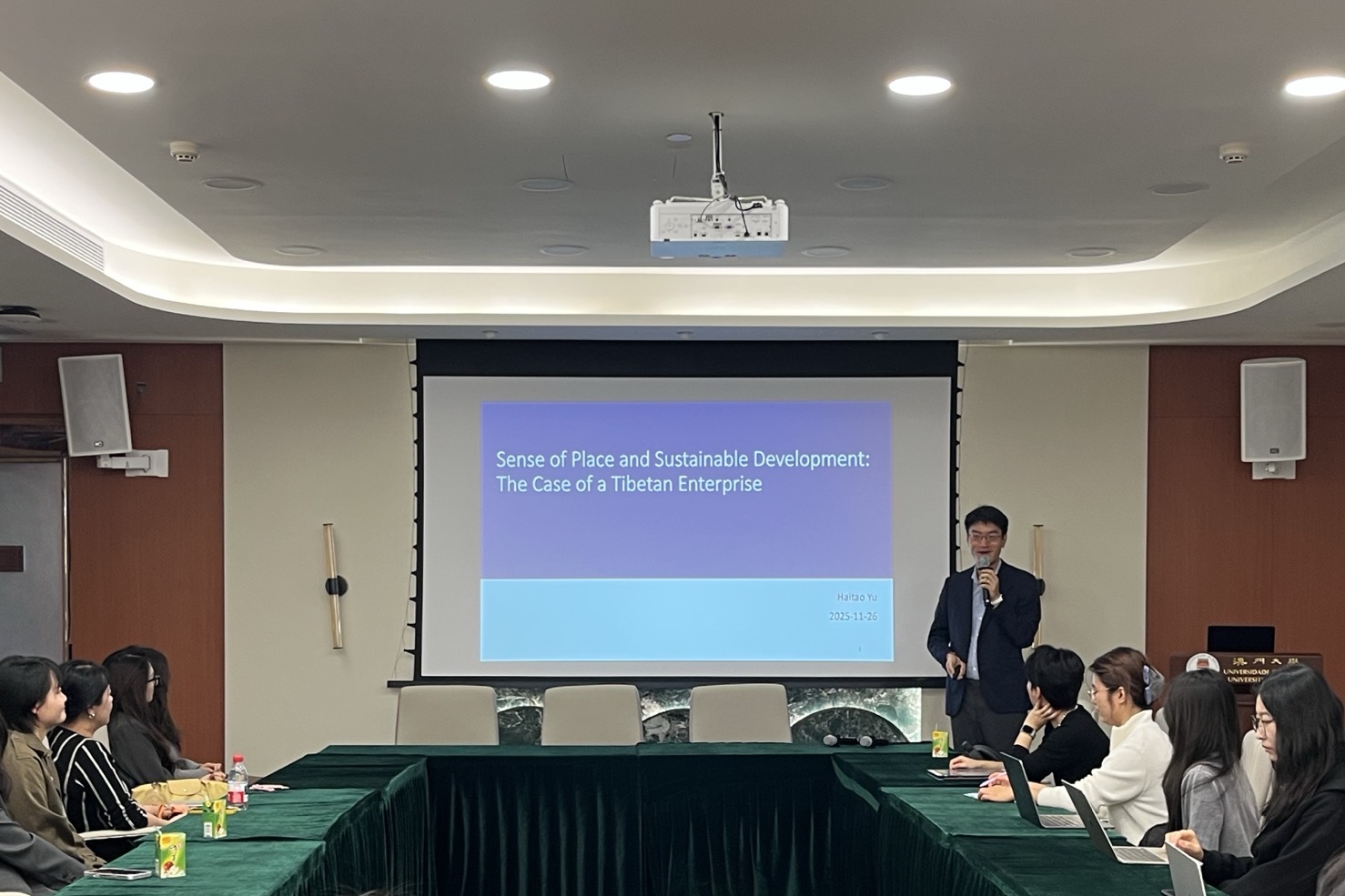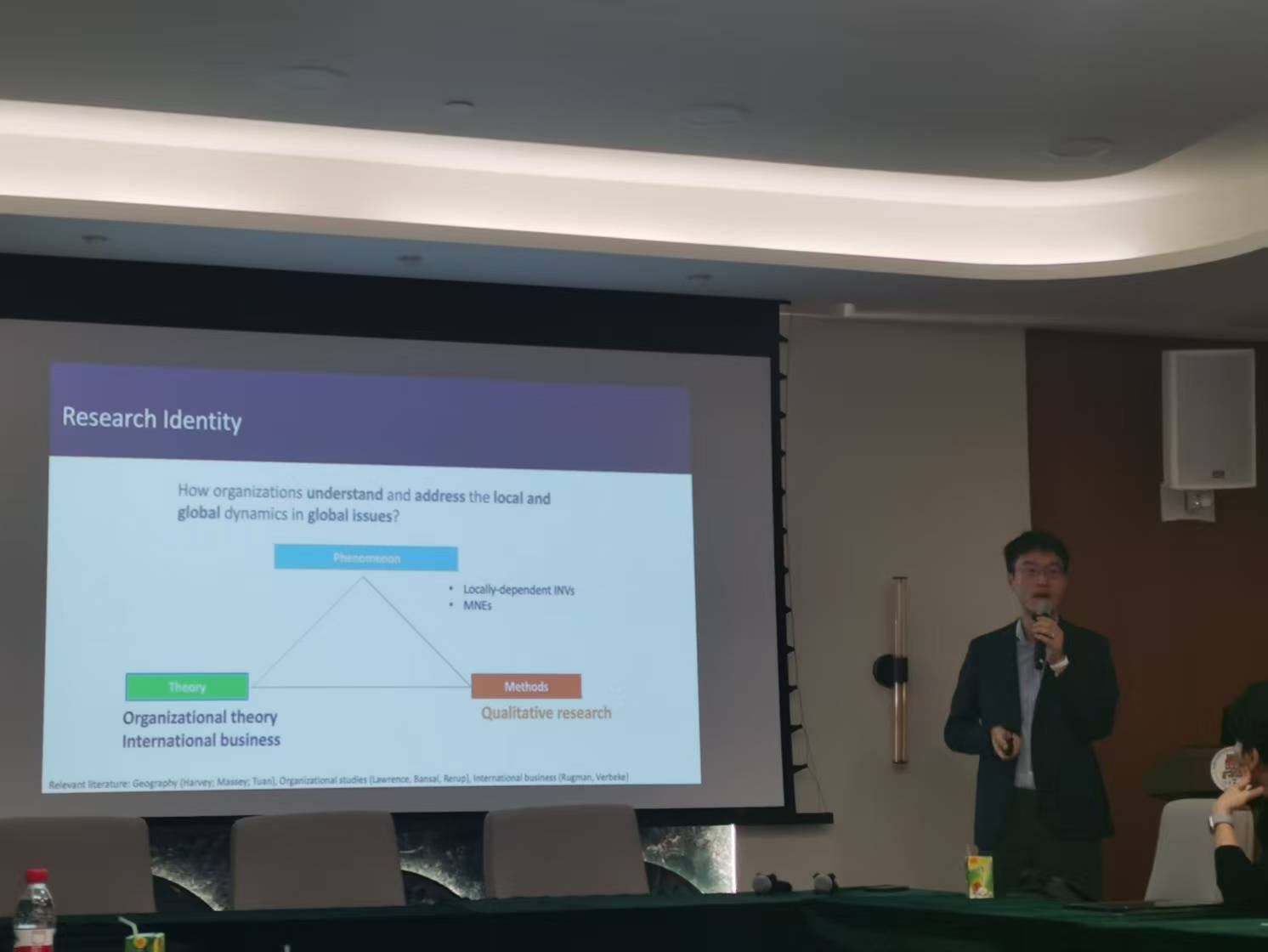
On November 26, 2025, Dr. Haitao Yu, Assistant Professor of Department of Management and Marketing at the University of Macau, presented an in-depth and insightful academic talk titled “Sense of Place and Sustainable Development: The Case of a Tibetan Luxury Enterprise.”
- From Personal Research Identity to Theoretical Construction
Assistant Professor Yu began by candidly sharing his own research identity and background. As a scholar from the Aba Tibetan and Qiang Autonomous Prefecture, he has consistently focused on how organizations seek balance between regional and global dynamics. He pointed out that although sustainable development challenges like poverty and climate change are global phenomena, they are always experienced within specific “places” and require localized action to address.
- Deconstructing the Theory and Practice of “Sense of Place”
Professor Yu systematically outlined the theoretical lineage of “sense of place.” He noted that traditional management studies have largely viewed sense of place as an emotional attachment, suggesting that managers with a strong sense of place are more likely to promote sustainable development. However, in today’s world where globalization and virtual reality technologies blur geographical boundaries, the role of sense of place in a “borderless world” urgently needs re-examination.
To address this, Professor Yu proposed the core research question: “How does sense of place guide an organization’s sustainable development practices?” To answer this, he conducted an in-depth ethnographic study over several years (2017-2024) of a luxury enterprise located in a nomadic village on the Tibetan Plateau—the Norlha Yak Cashmere Atelier. Through participatory observation, in-depth interviews, and archival analysis, he accumulated a wealth of first-hand data.
- Constructing the Core Model: Two Forms of Sense of Place and Three Practical Pathways
Based on rich empirical data, Professor Yu identified two forms of “sense of place”:
Emotional Attachment: An emotional bond to a specific place.
Functional Dependence: A cognitive view of a place as a repository of resources.
He further theorized three pathways for organizational sustainable development practice:
Maintaining: Driven by emotional attachment, focused on preserving the physical proximity and historical heritage of a place.
Developing: Driven by functional dependence, seeking to accumulate material wealth by trading local resources and improving efficiency.
Transforming: When emotional attachment and functional dependence become “embodied” within the biophysical environment, their interaction enables an organization to preserve a place’s core elements while allowing its peripheral aspects to evolve in response to internal and external disruptions.
Professor Yu emphasized that when sense of place becomes “detached” from the specific physical environment, tension arises between maintaining and developing. Only through deep bodily interaction with a place, developing an “embodied sense of place,” can an organization find a path to transformation and achieve genuine sustainable development.
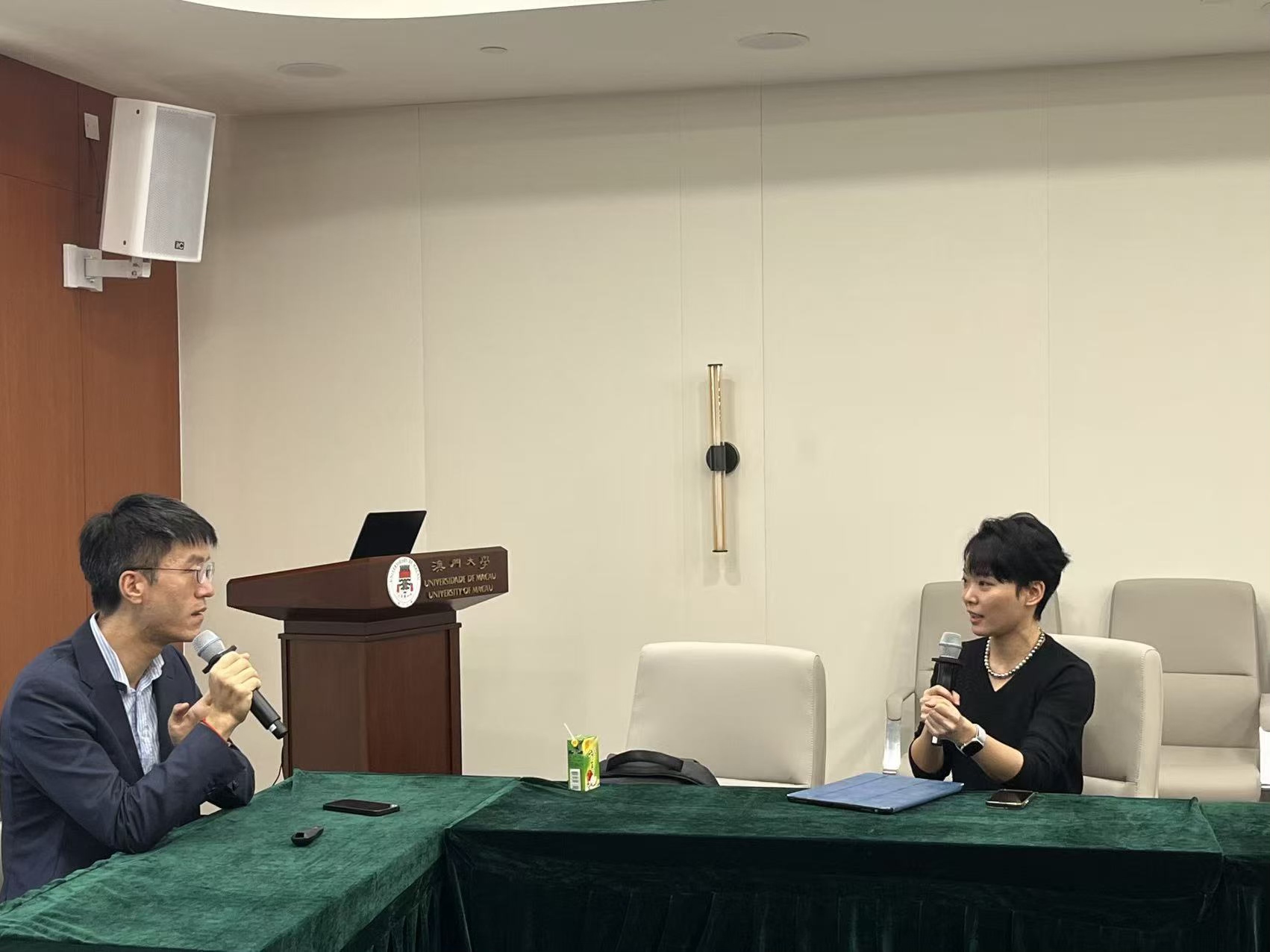
- Q&A Session: From Specific Case to Theoretical Insight
During the Q&A session, attendees raised questions about “how the findings from such a unique case in the Tibetan region can be generalized to other contexts.” Professor Yu provided a detailed response, clarifying the fundamental difference in the logic of generalization between qualitative and quantitative research: quantitative research relies on the statistical representativeness of a sample, whereas the value of qualitative research lies in the theoretical insights it generates, not the universality of the sample. He stressed that although the Norlha Atelier is located in a remote area, its manifestation of the theoretical property of “deep connection between organization and place” makes it an ideal case for studying the mechanisms of “sense of place.” The generalization of the research is not through statistical extrapolation but through theoretical analogy—as long as organizations in other contexts have a close connection to their place, and that place is facing pressures for change, the theoretical framework of “two forms of sense of place, three practical pathways” proposed in this study holds significant explanatory and heuristic value.
This lecture not only demonstrated rigorous qualitative research methods and profound theoretical insights but also allowed the audience to see how a study, rooted in the land and imbued with warmth and a sense of mission, was born and grew. Professor Yu’s research provides a novel framework for understanding the complex relationship between organizations and place, and points the way for sustainable development practice.