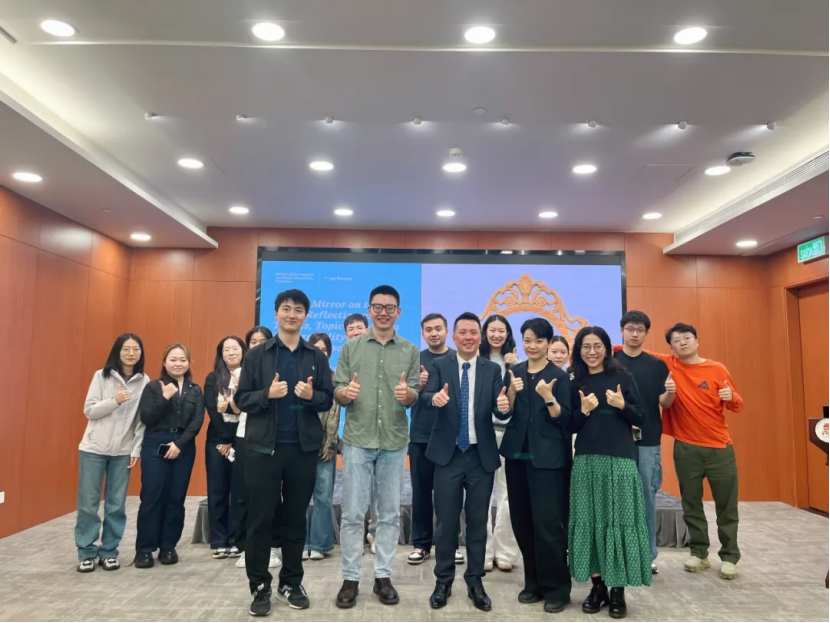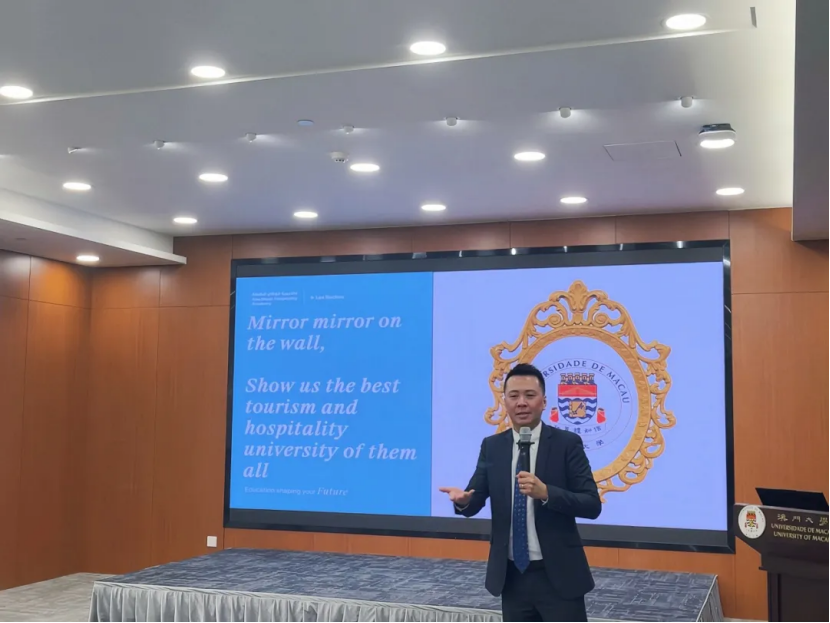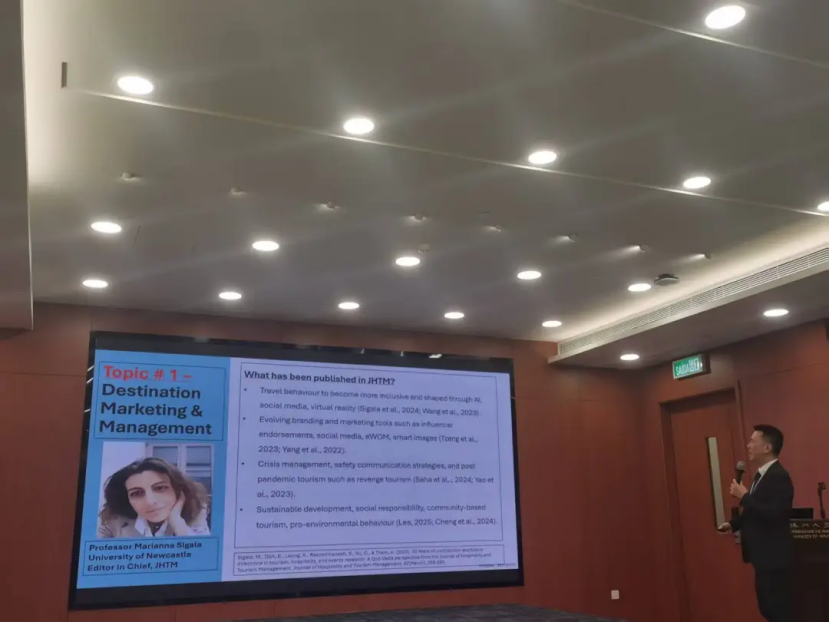
Recently, Professor Edmund Goh from Abu Dhabi Hospitality Academy – Les Roches delivered an insightful academic presentation titled “Research and Publishing Trends in Hospitality and Tourism Research-What Graduate Students Should Know.”
Professor Goh began by introducing publication trends in the field of tourism, such as the growth in the number of journals and changes in the impact of research papers. He then shifted the focus to an in-depth analysis of research topics and practical tips for academic writing.
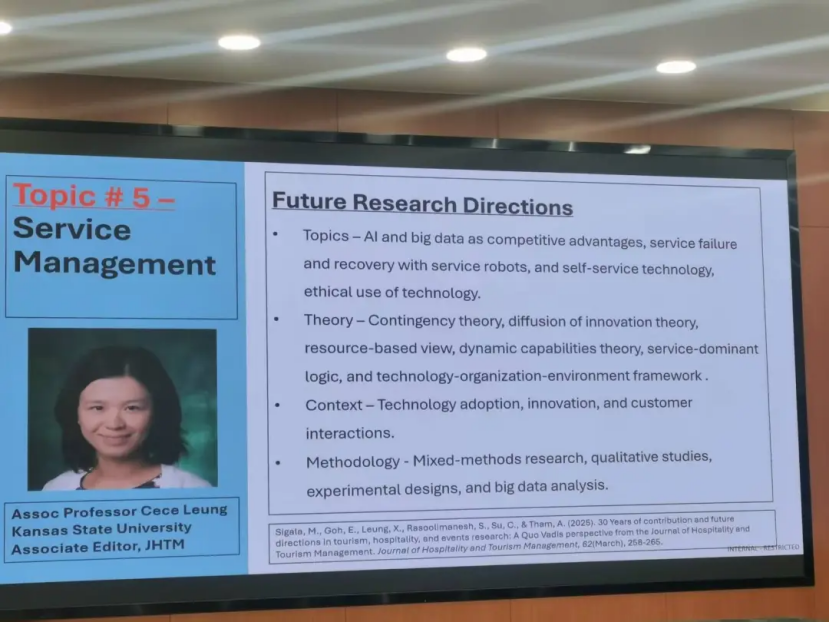
Regarding research topics, Professor Goh took the example of topics highlighted in the Journal of Hospitality and Tourism Management to discuss future directions in core areas such as events and festivals, as well as service management. He pointed out that research on events and festivals needs to move beyond traditional frameworks, with a focus on the application of immersive technologies in event experiences, shifts in participant behavior in the post-pandemic era, and innovative operational models for sustainable festivals. For the field of service management, he emphasized the importance of addressing emerging topics such as fault detection and remediation mechanisms for service robots, how AI and big data can build competitive advantages, and the ethical boundaries of technology applications alongside building customer trust.
In the academic writing segment, Professor Goh shared practical tips, noting, for instance, that a literature review should be an engaging narrative rather than a dry list of references. He elaborated that an excellent literature review should establish a clear logical framework to trace the evolution of the research field, identify “conflicts” and “contradictions” in the literature to highlight the research’s value, and skillfully create “suspense” to naturally introduce research gaps.
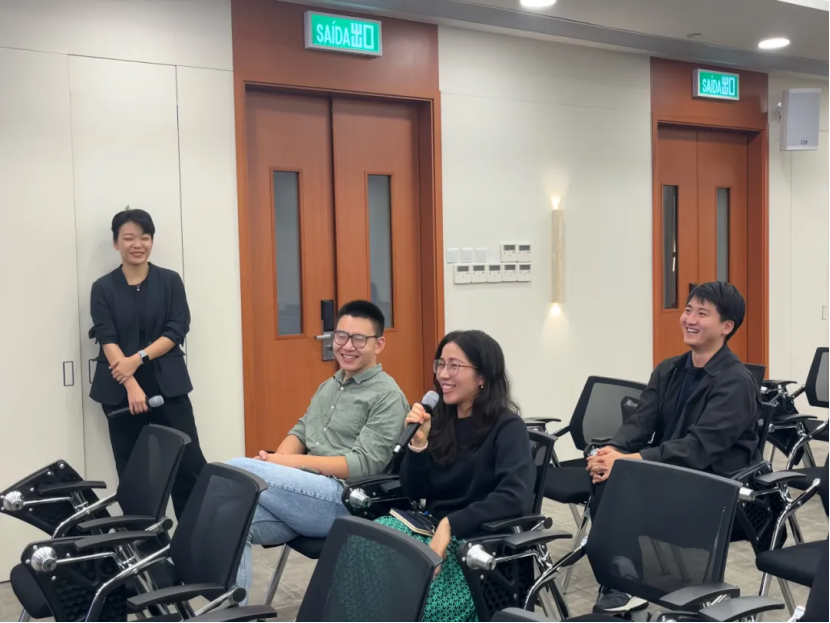
During the interactive session, a student raised a relatable question: How can one evaluate the quality of a research idea, and when should an unsuitable idea be abandoned? Professor Goh responded pragmatically, advising researchers to repeatedly self-reflect: Has this question already been studied? What theoretical framework can be used to explain it? If, after thorough consideration, a unique research value cannot be identified, it may be time to adjust the direction. He particularly emphasized the importance of thorough discussions with supervisors during this self-reflection process, as their experience can often help researchers avoid unnecessary detours.
The entire seminar not only pointed researchers toward future directions but also provided comprehensive guidance from topic selection to writing. Attendees expressed that these practical suggestions were highly valuable for enhancing the quality of their research.